How to Prepare for a Theater Interview: Research, Questions, and Recording Checklist
The interview is in four days. You have the play in your bag, a half-formed answer about "the process," and a vague memory of where the microphone goes. That is a workable starting point. A theater interview is a performance under different lights: someone wants to understand how the work was made, and you are the person who knows. A little preparation separates an hour of pleasant circling from a conversation that sounds like you and gives the interviewer something worth printing.
Research: Start With the Work, Not the Search Engine
Read the script again, even if you spent six weeks inside it. Reading from outside the rehearsal room shows you things the character work hid—how the play is built, where the jokes land, which scene carries the argument. If it is a musical, listen to the cast recording once with attention to the arrangements rather than your own track. If it is a devised piece, look at how the company describes its process elsewhere; you will need a version of that story that is also yours.
Then learn the context you are part of. Who is directing, who designed it, how long the run lasts, whether the company has performed in this venue before. If you are touring, know the dates. If this is a revival, know what the last production did differently, at least roughly. Interviewers notice when a guest can speak about the whole production and not only their own scenes, and they will quote it.
Write down three things you genuinely find interesting about the show: a design decision, a line that changed in previews, the reason the company chose ninety minutes with no interval. These become anchors. When a question catches you cold, you can return to one of them and the answer will have substance.
Research the interviewer too, but lightly. Read two or three of their previous pieces. Do they prefer backstage anecdote or analysis? Do they write long profiles or short Q&As? You are not tailoring your personality to them; you are learning what kind of detail will survive the edit. And if the show has been reviewed, read at least one review, so that a question about the press does not catch you pretending.
Know the Format Before You Say Yes
More interviews go sideways because of unclear logistics than because of difficult questions. Ask in the confirmation email: how long is it expected to run, is it live or recorded, is it edited, will it appear in print, audio and video, and roughly when. If it is a podcast, ask whether it is audio only—you can dress for the radio and keep your notes open. If it is filmed, ask about framing and whether they want you standing, seated, or in the rehearsal room.
Ask who the audience is, as well. A drama school podcast, a city culture desk and a fringe listings site will ask about the same show in three different registers. Knowing which one you are speaking to is half the preparation. None of these questions are fussy; they are the ones a producer wishes more guests would ask.
A Question Plan You'd Actually Enjoy Answering
Theater interviews run on a familiar set of questions, which is good news. You can build answers in advance without sounding rehearsed, as long as you build them as thoughts rather than scripts.
- The thirty-second version of the show. Title, writer, what it is, why it is worth an evening. Keep any plot summary to two sentences.
- How you came to it. The audition, the phone call, the workshop, the friend who recommended you. Specifics beat adjectives.
- One craft problem and how you solved it. The quick change, the accent, the staircase, the scene where the props keep misbehaving. This is the material that makes an interview memorable.
- One story that shows the company, not only you. The night the smoke machine failed. The understudy who went on cold. The note that fixed a scene in five minutes.
- What comes next, in one sentence. If nothing is confirmed, say so plainly; "I have two auditions and a lot of hope" is a perfectly good answer.
- One thing you would like to be asked, and the answer to it. Use it if the conversation leaves an opening.
The Questions You'd Rather Skip
Why did you take this role? What do you say to people who think theatre costs too much? What was it like working with someone far more famous than you? Prepare a short honest answer and a bridge: "The short answer is X. What is more interesting to me is Y." That is a legitimate move in conversation and it keeps you off the defensive. Rehearse the bridge once out loud, not five times.
Before you close your notebook, decide on three things you want to have said by the end—a collaborator's name, the reason the piece matters to you, a detail about the design. Check at the finish whether you got them in. If not, and there is time, say, "One thing I wanted to mention."
The Recording Setup: Your Half of the Signal
Most theater interviews now happen through a laptop, a phone, or a borrowed recorder in a green room. However it happens, you are responsible for your half of the sound and picture.
Audio
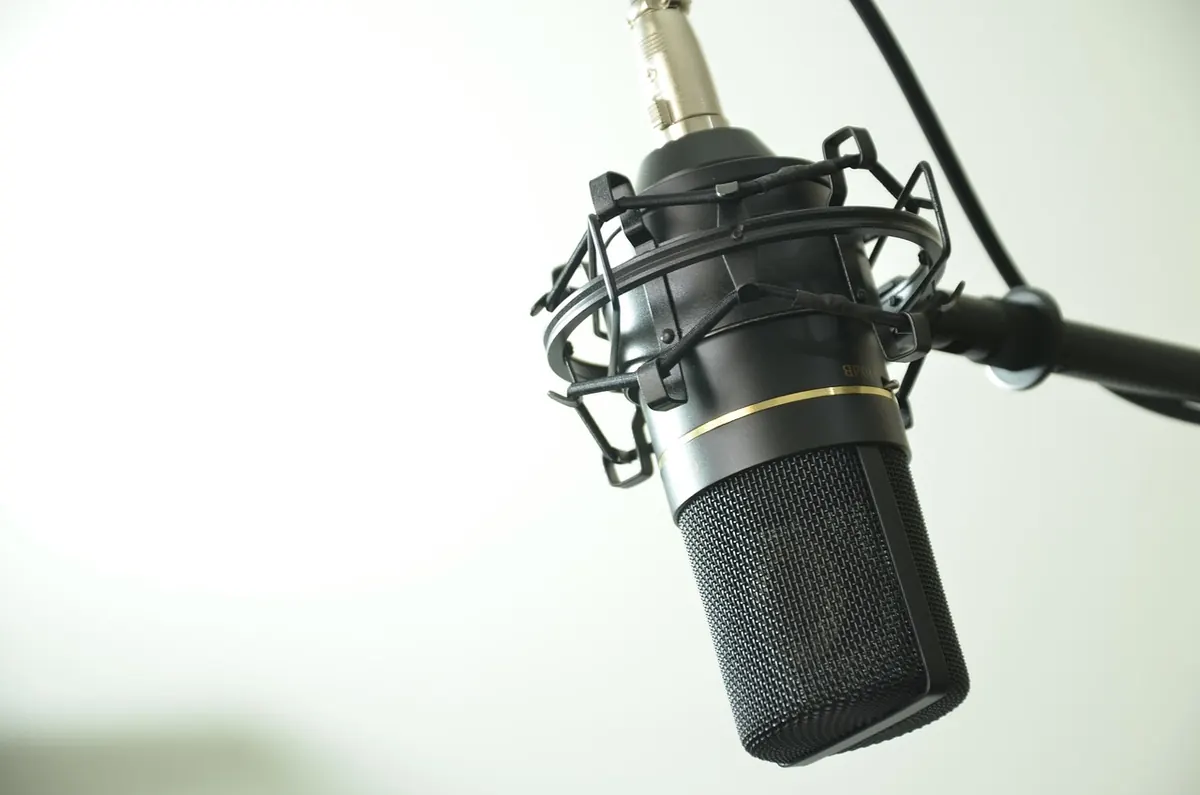
- Use wired headphones with an inline mic, or a USB microphone a hand's width from your mouth. Laptop speakers and room mics make you sound distant.
- Do a twenty-second test recording and listen back before the call starts.
- Put the phone in airplane mode or do not disturb, and close the window behind you if there is traffic.
- Choose a room with soft furnishings. A carpeted bedroom beats a kitchen with hard surfaces every time.
Video and Connection
- Put the light in front of you, not behind. A window works; a lamp angled at the wall works better.
- Set the camera at eye level. Tidy the background without making it look like a hostage video.
- Wear what you would wear to a first read-through. Avoid fine stripes, large logos, and anything that rustles.
- Plug the laptop in, keep a phone number for the producer in case the link dies, and have water in a glass rather than a bottle.
- Keep notes near the camera but out of shot. A single index card of prompts is enough.
For an in-person recording in a cafe, set the recorder on a folded cloth, ask your interviewer to confirm the level, and check that the machine is still running at the halfway point. It is a small habit that has saved many good conversations.
If Something Goes Wrong
The internet drops. You lose the thread of a long answer. The interviewer asks something that assumes a fact about the production and the fact is wrong. Slow down, and say what you need: "Can we go back to that question?" or "I want to correct one thing before we continue." Interviewers are not adversaries; they want usable material. If you say something you regret, ask to redo the answer then and there. Almost everyone will agree, and it is far easier than asking for a cut afterwards.
Follow-Up Etiquette Without the Follow-Up Nudge
Send a short thank-you within a day or two: two or three lines, one specific reference to the conversation. If you promised a photograph, a programme scan or a contact for the director, send it in the same email. Correct factual errors—the spelling of a name, the order of a double bill, the dates of the run—promptly and without ceremony. Offer to check names and titles in the copy; do not ask to approve the whole piece, which puts a writer in an awkward position and rarely improves the article. When it is published, share it once, and keep the relationship warm. The person who wrote about this show will be writing about the next one.
Ten Minutes Before You Press Record
- Water poured, phone silenced, door closed.
- One index card of prompts in view: the three anchors, the thirty-second description, the three things you want to say.
- Names checked—of the play, the writer, the director, the venue.
- A test recording listened to, not just made.
- Shoulders down, three slow breaths, and the first answer rehearsed once out loud.
Then let the plan go. The preparation is there so that you can listen properly, follow the conversation where it actually goes, and sound like the person who made the work.
Photo: Pexels / Pixabay
You Might Also Like
Opera, musicals and straight drama share a stage but ask different things of an audience. A practical guide to spotting the differences before you book a ticket.
A practical guide to Italian audience customs — when to clap at the opera, how to shout bravo correctly, why booing is a tradition, and how to handle the curtain call.